- HOME
- MONUMENT
- Convent of Christ
- History
- Architecture
- Personalities
- King Afonso Henriques
- D. Gualdim Pais
- King Dinis
- King John I
- D. Lopo Dias de Sousa
- King Duarte
- Prince D. Henrique (Henry
- King John II (1455 - 1495
- King Manuel I (1469 - 152
- Diogo de Arruda
- João de Castilho
- Jorge Afonso
- Olivier de Gand
- King John III (1502 - 155
- Diogo de Torralva
- Friar Anthony of Lisbon
- Baltazar de Faria
- Filipe Terzi
- Philippine Dinasty
- King Philip II of Spain
- King John IV
- Domingos Serrão
- Queen Mary II
- Prince Fernando
- Costa Cabral
- Artisans and Artists
- Intangible Heritage
- Related Heritage
- Glossary
- VISIT OUR MONUMENT
- HERITAGE LEARNING
- TOMAR
- MONASTERIES ROUTE

Lighting
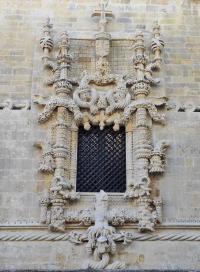
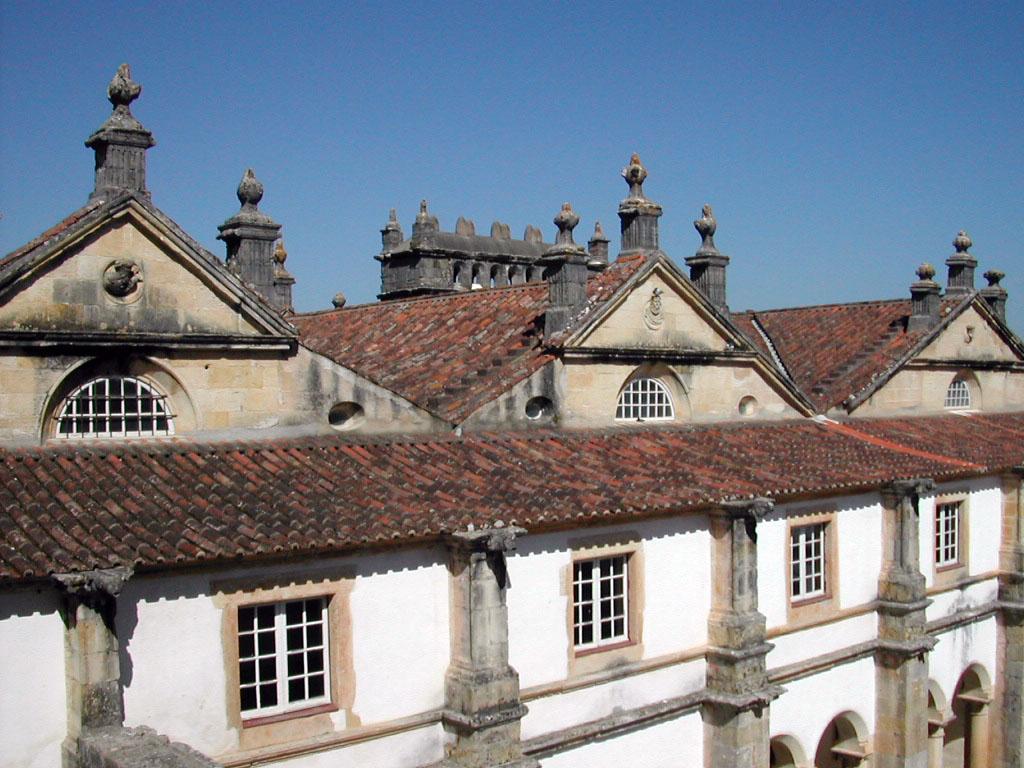
At the heyday of monastic life after the works construction of the period of King John III, the Convent of Christ continued to depend on sunlight for the daily activities of its religious community. Thus, we can understand how the Scriptorium, as a place dedicated to reading and writing, is south facing with large windows that allow in the much needed light.
The cells of the friars also had a window that allowed reading, the light usually coming from the left hand side, since there they had a stone bench and a small niche that would serve as a shelf.
Generally, all convent buildings are well served with natural light, and the existence of window and door side openings, obliquely oriented, in the search for the best capture of sunlight, is evident.
The cells of the friars also had a window that allowed reading, the light usually coming from the left hand side, since there they had a stone bench and a small niche that would serve as a shelf.
Generally, all convent buildings are well served with natural light, and the existence of window and door side openings, obliquely oriented, in the search for the best capture of sunlight, is evident.
Windows are high in corridors and church, with skylights dome and vaults while in domestic quarters, understandably, windows are average sized.
Monastic life, however, did not stop at sunset. For this reason, in the Convent of Christ like in other monastic spaces, candleholders, chandeliers and other illuminating artefacts were not missing. Oil or wax lamps were used in everyday life and religious services.
Night movement in the Convent went on with the support of individual lamps used by the monks and other co-inhabitants. In the Philips Vestibule there is still the place for the lamps that were provided to foreigners who entered the convent at night.
In areas where the night lighting was permanent, their maintenance was assured by a friar who was specially assigned to this task.
By night fall, the contemplation of the stars was also a common activity, reason why there are still visible traces of a clock tower that might have served also as an observatory.
SERVICES - ACTIVITIES
HIGHLIGHTS