- HOME
- MONUMENT
- Convent of Christ
- History
- Architecture
- Personalities
- King Afonso Henriques
- D. Gualdim Pais
- King Dinis
- King John I
- D. Lopo Dias de Sousa
- King Duarte
- Prince D. Henrique (Henry
- King John II (1455 - 1495
- King Manuel I (1469 - 152
- Diogo de Arruda
- João de Castilho
- Jorge Afonso
- Olivier de Gand
- King John III (1502 - 155
- Diogo de Torralva
- Friar Anthony of Lisbon
- Baltazar de Faria
- Filipe Terzi
- Philippine Dinasty
- King Philip II of Spain
- King John IV
- Domingos Serrão
- Queen Mary II
- Prince Fernando
- Costa Cabral
- Artisans and Artists
- Intangible Heritage
- Related Heritage
- Glossary
- VISIT OUR MONUMENT
- HERITAGE LEARNING
- TOMAR
- MONASTERIES ROUTE

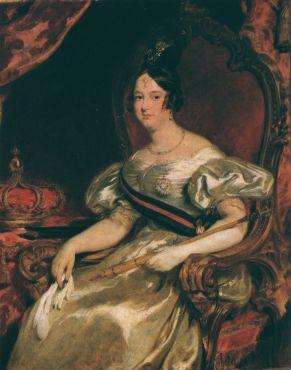
Queen Mary II (1819 - 1853)
Queen Mary II was born in Rio de Janeiro (Brazil), on April 4th, 1819, receiving the name of Maria da Gloria Joana Carlota Leopoldina da Cruz Francisca Xavier de Paula Isidora Micaela Gabriela Rafaela Gonzaga.
After the abdication in 1826, her father, King Pedro IV, leaves the regency of the kingdom to Miguel, uncle to Queen Mary who, in 1834, at fifteen years of age and after the Civil War, finally took over the government of the country. In the following year, Queen Mary marries Augusto, Prince of Leuchtenberg, the grandson of Empress Josephine, first wife of Napoleon Bonaparte. However, the Prince dies one year later.
In 1834, the extinction of religious orders and corporations is decreed. Buildings, monasteries, hermitages, royal chapels, and other buildings that were not used exclusively for public worship, were appropriated by the state and their contents sold for the public purse benefit. Queen Mary II married, for the second time, Fernando of Saxe-Coburg-Gotha, brother of King Leopold I of Belgium. The wedding took place on April 9th, 1836.
During her short reign, one of the most turbulent periods of Portuguese history including fighting between liberals and absolutists, several historical events ensued: strife like the Civil War, the September revolution, the Belenzada, the Rebellion of the Marshals, the Maria da Fonte, the Patuleia.
It is historically known the great esteem Queen Mary harboured for the Count and Marquis of Tomar, António Bernardo da Costa Cabral, State Counsellor and President of the Ministry, who acquired part of the Convent of Christ in 1838. The monarch was indeed responsible for the upgrade of Tomar to town, during her visit on 13th February 1844. Queen Mary II died in Lisbon at Palácio das Necessidades, on November 15th, 1853.
After the abdication in 1826, her father, King Pedro IV, leaves the regency of the kingdom to Miguel, uncle to Queen Mary who, in 1834, at fifteen years of age and after the Civil War, finally took over the government of the country. In the following year, Queen Mary marries Augusto, Prince of Leuchtenberg, the grandson of Empress Josephine, first wife of Napoleon Bonaparte. However, the Prince dies one year later.
In 1834, the extinction of religious orders and corporations is decreed. Buildings, monasteries, hermitages, royal chapels, and other buildings that were not used exclusively for public worship, were appropriated by the state and their contents sold for the public purse benefit. Queen Mary II married, for the second time, Fernando of Saxe-Coburg-Gotha, brother of King Leopold I of Belgium. The wedding took place on April 9th, 1836.
During her short reign, one of the most turbulent periods of Portuguese history including fighting between liberals and absolutists, several historical events ensued: strife like the Civil War, the September revolution, the Belenzada, the Rebellion of the Marshals, the Maria da Fonte, the Patuleia.
It is historically known the great esteem Queen Mary harboured for the Count and Marquis of Tomar, António Bernardo da Costa Cabral, State Counsellor and President of the Ministry, who acquired part of the Convent of Christ in 1838. The monarch was indeed responsible for the upgrade of Tomar to town, during her visit on 13th February 1844. Queen Mary II died in Lisbon at Palácio das Necessidades, on November 15th, 1853.
SERVICES - ACTIVITIES
HIGHLIGHTS